

Mastering KSeF E-Invoice Automation in Poland: A Practical Guide for B2B Businesses Ahead of 2026
The landscape of B2B commerce in Poland is on the cusp of a monumental transformation. With the mandatory implementation of the National e-Invoice System, KSeF (Krajowy System e-Faktur), fast approaching in February 2026, Polish businesses face a critical deadline. This isn't merely a technological upgrade; it's a fundamental shift in how transactions are documented, reported, and managed. For any B2B company operating in Poland, understanding and preparing for KSeF isn't just about compliance; it's about safeguarding operations, optimizing financial processes, and maintaining a competitive edge in an increasingly digital economy. Ignoring this shift is not an option; embracing it strategically is the path to future success.
This comprehensive guide, brought to you by Scopio – Europe's first MCP+UCP AI commerce platform – will demystify KSeF, offering a practical, compliance-focused roadmap for B2B companies. We'll navigate the intricacies of the system, from its core principles and technical requirements to the practical steps for integration and how Scopio's innovative AI-powered solutions can turn this regulatory challenge into a significant operational advantage. Prepare your business for the future of Polish e-invoicing.
What is KSeF and Why Does It Matter to Your Business?
KSeF, or the National e-Invoice System, is a centralized platform introduced by the Polish Ministry of Finance for issuing, receiving, and storing structured electronic invoices. Initially launched as an optional system in 2022, KSeF is set to become mandatory for all active VAT taxpayers in Poland from February 2026. This means that virtually every B2B transaction within Poland will require invoices to be issued and processed exclusively through the KSeF system, moving away from traditional PDF or paper formats.
The primary objective of KSeF is to enhance tax transparency, combat VAT fraud, and streamline tax reporting processes. For businesses, this translates into several key implications. On one hand, it promises benefits such as faster VAT refunds (potentially reduced from 60 to 40 days), increased security and authenticity of invoices, and a significant reduction in administrative burden associated with archiving physical documents. On the other hand, it demands a fundamental re-evaluation and overhaul of existing invoicing and accounting systems, requiring significant investment in technology and process adaptation.
Understanding KSeF is not just about avoiding penalties; it's about leveraging a system designed to bring greater efficiency and control to your financial operations. It standardizes data, reduces manual errors, and provides a clear, auditable trail for every transaction. For forward-thinking businesses, KSeF presents an opportunity to modernize their back-office functions and integrate them more deeply with their front-end commerce operations, especially those driven by AI and automation.
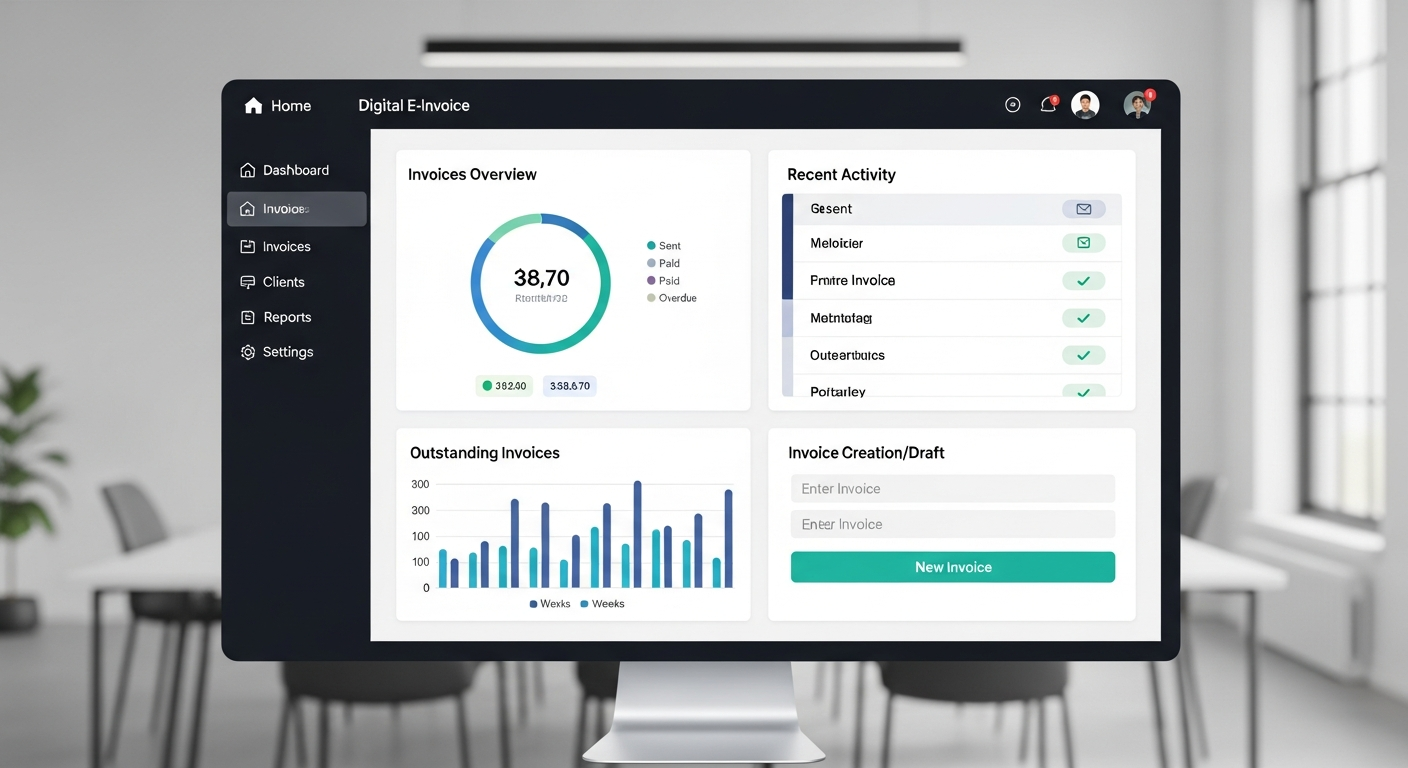
Traditional vs. KSeF Invoicing: A Paradigm Shift
The transition to KSeF represents a profound shift from the traditional invoicing methods many businesses are accustomed to. For decades, invoices have primarily existed as physical paper documents or digital files in various unstructured formats like PDFs or even simple emails. These methods, while familiar, are prone to errors, require manual processing, and can be challenging to verify and reconcile efficiently. KSeF fundamentally changes this paradigm by introducing a standardized, structured approach.
Under KSeF, an invoice is no longer just a document; it's a data set. All invoices must conform to a predefined logical structure known as the FA(2) XML schema. This XML (Extensible Markup Language) format ensures that every piece of information – from seller and buyer details to item descriptions, VAT rates, and total amounts – is presented in a machine-readable, standardized way. This standardization is crucial for automation, allowing systems to automatically validate, process, and record invoices without human intervention, significantly reducing the potential for discrepancies and errors.
Another key differentiator is the concept of the UPO (Urzedowe Potwierdzenie Odbioru), or Official Confirmation of Receipt. When an invoice is successfully submitted to KSeF, the system generates a UPO. This isn't just an acknowledgment; it's a legally binding confirmation that the invoice has been received by the tax authorities and is considered officially issued. This eliminates disputes over whether an invoice was sent or received, providing unparalleled legal certainty for both parties involved in a transaction. The UPO contains a unique KSeF identification number, which serves as the official invoice number within the system, replacing any internal numbering schemes once the invoice is accepted.
Here’s a comparative overview to highlight the key differences:
| Feature | Traditional Invoicing (Pre-KSeF) | KSeF e-Invoicing (Post-Feb 2026) |
|---|---|---|
| Format | Paper, PDF, DOC, email (unstructured) | Structured XML (FA(2) schema) only |
| Issuance | Directly to recipient (email, post, hand delivery) | Via KSeF system to the Ministry of Finance's central database |
| Receipt Confirmation | Manual acknowledgment, read receipts, delivery confirmation | Automated UPO (Official Confirmation of Receipt) with KSeF ID |
| Legal Validity | Recipient's physical/digital receipt | Date of UPO issuance by KSeF system |
| Archiving | Manual storage (physical files, digital folders) | Centralized storage within KSeF for 10 years |
| Correction Invoices | Issued as new document, sent to recipient | Issued as new XML via KSeF, linked to original KSeF ID |
| Accessibility | Limited to sender/recipient's systems | Accessible to both parties via KSeF portal/API |
| VAT Refunds | Standard 60 days (potentially longer) | Potentially faster (e.g., 40 days) for KSeF users |
Your Step-by-Step Guide to KSeF Integration
Integrating with KSeF requires a structured approach, encompassing technical setup, data preparation, and process adjustments. While the specifics can vary based on your existing IT infrastructure, the core steps remain consistent for all B2B taxpayers.
1. Obtaining API Credentials and Authorization
The first critical step is to establish secure communication with the KSeF system. This involves obtaining the necessary API credentials and authorization. Businesses need to register with KSeF, typically through the e-Urząd Skarbowy (e-Tax Office) portal or by using a qualified electronic signature or a trusted profile (Profil Zaufany). This process generates unique authorization tokens or keys that your software system will use to authenticate with the KSeF API. These credentials are vital for securely sending and receiving invoices, and their management must adhere to strict security protocols.
2. Building the FA(2) XML Invoice
Once authenticated, your system needs to generate invoices in the precise FA(2) XML schema format. This is perhaps the most complex technical aspect. Every element of your invoice data – from basic information like NIP (Tax Identification Number) and addresses, to detailed line items, VAT rates, and payment terms – must be mapped accurately to the corresponding fields within the XML structure. This usually requires either developing custom software, utilizing an existing ERP or accounting system with a KSeF module, or integrating with a specialized KSeF automation platform. Precision is paramount here, as even minor deviations from the schema will result in validation errors and rejection by the KSeF system.
3. Signing the XML Invoice
Before submission, each XML invoice must be digitally signed to ensure its authenticity and integrity. In Poland, this typically involves using a qualified electronic signature, which is legally equivalent to a handwritten signature, or a trusted profile (Profil Zaufany) for individuals representing the company. The signature encrypts a hash of the XML data, ensuring that the invoice cannot be tampered with after signing. Your integration solution must incorporate a module capable of applying these digital signatures correctly before the invoice is transmitted to KSeF.
4. Submitting the Invoice to KSeF
With the signed XML invoice ready, the next step is its submission to the KSeF system via its dedicated API endpoint. KSeF supports both synchronous and asynchronous submission methods. For individual invoices, synchronous submission might be sufficient, providing immediate feedback. However, for businesses processing a high volume of invoices, asynchronous submission is generally preferred. This involves sending a batch of invoices and then polling the KSeF system periodically for their processing status and UPO confirmations. Robust error handling and retry mechanisms are crucial at this stage to manage network issues or temporary KSeF system unavailability.
5. Retrieving the UPO and KSeF ID
After successful submission, KSeF processes the invoice and, if validated, issues an Official Confirmation of Receipt (UPO) along with a unique KSeF identification number. Retrieving this UPO is the final step in the invoice issuance process. The UPO serves as legal proof that the invoice has been successfully submitted and accepted by the tax authorities. Your system must be able to automatically retrieve and store these UPOs, linking them back to your internal invoice records. The KSeF ID becomes the official reference for that invoice, which should be used for any future correspondence or corrections related to that specific transaction.

Common KSeF Pitfalls and How to Navigate Them
While KSeF promises streamlined operations, the integration process is not without its challenges. Businesses must be prepared to identify and handle common errors to ensure smooth compliance and avoid operational bottlenecks.
1. Validation Failures Due to Incorrect XML Schema
The most frequent error encountered during KSeF integration is validation failure. The KSeF system is highly sensitive to the precise structure and content of the FA(2) XML schema. Even a minor deviation – an incorrectly formatted date, a missing mandatory field, an invalid NIP, or a wrong data type – will lead to immediate rejection. To mitigate this, thorough testing of your XML generation module is essential. Utilize KSeF's test environments (pre-production systems) extensively to validate your XML files against the latest schema version. Implement robust internal validation checks within your software before attempting to send the XML to KSeF. Error messages from KSeF are usually descriptive, so understanding them and having a quick remediation process is crucial.
2. Timeout Handling and Asynchronous Submissions
Direct synchronous submissions to KSeF can sometimes experience timeouts, especially during peak hours or if the system is under heavy load. This can lead to uncertainty about whether an invoice was received or lost. For high-volume businesses, relying solely on synchronous calls is risky. The recommended approach is to implement asynchronous submission methods. This involves sending invoices to a KSeF queue and then periodically checking the status of these submissions using a dedicated query endpoint. Your system should be designed with retry logic, exponential back-off strategies, and robust logging to handle temporary network issues or KSeF service unavailability without losing invoice data.
3. Managing Correction Invoices (Faktura Korygująca)
Issuing correction invoices (popularly known as "korekta") under KSeF also requires a specific process. Unlike traditional methods where a correction might simply reference the original invoice number, in KSeF, a correction invoice must explicitly reference the unique KSeF ID of the original invoice it aims to correct. This establishes a clear, undeniable link within the system. Businesses need to ensure their software can accurately retrieve the original KSeF ID and embed it into the correction XML. Furthermore, KSeF distinguishes between different types of corrections (e.g., quantity, price, NIP correction), and the XML schema has specific fields to indicate these, which must be populated correctly.
"The transition to KSeF is more than a compliance hurdle; it's a catalyst for digital transformation. Businesses that embrace automation now will not only meet the 2026 deadline but will unlock significant operational efficiencies and gain a strategic advantage in the AI-driven commerce era."
Beyond Compliance: How Scopio Automates KSeF for AI Commerce
For many businesses, KSeF integration looms as a daunting technical and operational challenge. However, with the right platform, it can be seamlessly integrated into your existing commerce ecosystem, particularly for those leveraging AI. Scopio, as Europe's first MCP+UCP AI commerce platform, offers a unique advantage by fully automating KSeF compliance as an integral part of its intelligent commerce solutions.
Imagine a scenario where your AI agent, powered by Scopio's MCP+UCP Commerce Layer, interacts with a customer, negotiates terms, and ultimately places an order. Traditionally, this would then trigger a manual or semi-manual process for invoice generation, often involving human oversight and potential delays. With Scopio's KSeF E-Invoice Automation, this entire sequence is streamlined and fully automated. When an AI agent successfully places an order or completes a transaction via our Multi-Channel Purchase (MCP) and Universal Commerce Protocol (UCP) framework, the KSeF invoice is generated automatically in the background.
This automation extends beyond mere generation. Scopio's system is built to handle the entire KSeF lifecycle: it constructs the FA(2) XML schema with precise data mapping, applies the necessary digital signatures, and submits the invoice directly to the KSeF system via API. Crucially, it then retrieves and processes the UPO (Official Confirmation of Receipt) and the unique KSeF ID, linking it back to the transaction within your Scopio-powered commerce platform. This means your business maintains a complete, compliant, and instantly accessible record of all e-invoices, without any manual intervention.
The benefits are profound. It eliminates the risk of human error in invoice creation and submission, ensures timely compliance, and frees up valuable accounting and administrative resources. For businesses leveraging Scopio's AI Lead Generation & Outbound Calling agent, or managing transactions through our Automated Marketplace with AI dispute resolution, KSeF automation provides an end-to-end digital workflow. This holistic approach not only meets regulatory requirements but transforms KSeF into an invisible, efficient component of your AI-driven commerce strategy, allowing you to focus on growth and customer experience. Explore our comprehensive AI commerce solutions to see how Scopio can revolutionize your operations.
KSeF and Cross-Border Transactions: VAT Implications for EU Trade
While KSeF is a game-changer for domestic Polish B2B transactions, its implications for cross-border transactions, especially within the European Union, require careful consideration. It's crucial to understand that KSeF primarily governs invoices issued by Polish VAT taxpayers to other Polish VAT taxpayers for transactions subject to Polish VAT. This means that not all invoices will fall under the KSeF mandate.
For cross-border B2B transactions, such as intra-Community supply of goods or services (sales to EU VAT-registered entities) or exports outside the EU, the current understanding is that these transactions generally fall outside the direct scope of mandatory KSeF e-invoicing. Invoices for these types of transactions will still typically be issued outside the KSeF system, often in PDF or other mutually agreed formats, and follow existing international VAT rules (e.g., reverse charge mechanism, VAT OSS for B2C). However, the tax authorities might still require certain data points from these transactions to be reported or reconciled with domestic KSeF data for comprehensive tax oversight.
It's important to differentiate: if a Polish business issues an invoice to a foreign entity (e.g., a German company with a German VAT ID) for services rendered in Poland, the invoice usually won't go through KSeF. However, if that same Polish business sells to a foreign entity that is registered for VAT in Poland (has a Polish NIP), then that transaction would fall under the KSeF mandate. The key determinant is whether the transaction is considered a domestic B2B supply subject to Polish VAT between two Polish VAT taxpayers (or a foreign entity with a Polish NIP). Businesses engaged in significant cross-border trade must carefully review their transaction flows and consult with tax advisors to ensure full compliance with both KSeF and international VAT regulations, including the potential for future extensions of KSeF's scope or interoperability with other EU e-invoicing systems.

The Cost of Delay: Penalties and Enforcement for Non-Compliance
The mandatory implementation of KSeF in February 2026 is a hard deadline, and the Polish tax authorities have outlined clear penalties for non-compliance. Ignoring or delaying KSeF integration can have significant financial and operational repercussions for B2B companies.
The enforcement schedule indicates that businesses that fail to issue invoices through KSeF when required, or issue them in an incorrect format, will face financial penalties. While the exact penalty amounts can vary and are subject to final legislative details, initial proposals have suggested substantial fines for each incorrectly issued or missing e-invoice. These penalties are not trivial and can quickly accumulate, especially for businesses with a high volume of transactions. Beyond direct fines, non-compliant businesses may also lose the benefit of faster VAT refunds, reverting to the standard 60-day period or even longer, impacting cash flow significantly.
Moreover, non-compliance can lead to increased scrutiny from tax authorities. Without KSeF integration, businesses will be unable to issue legally valid invoices for domestic B2B transactions, effectively hindering their ability to conduct business in Poland. This could result in transactional blockades, difficulties in proving deductible expenses, and challenges in VAT settlements. The KSeF system is designed to provide the tax administration with real-time access to transaction data, enabling more efficient and targeted audits. Non-compliance will immediately flag a business for investigation, diverting valuable resources and potentially leading to further legal and financial complications.
The message is clear: proactive preparation is essential. Businesses should not wait until the last minute to begin their KSeF integration journey. Early adoption and thorough testing of systems will minimize risks, ensure continuity of operations, and prevent costly penalties. The investment in KSeF automation now is an investment in future compliance and operational stability.
A Deeper Dive: Understanding the FA(2) XML Schema (Simplified)
While the full FA(2) XML schema is extensive and complex, understanding its core structure and key fields is vital for businesses during integration. This simplified walkthrough focuses on the most common elements you'll encounter when generating KSeF invoices.
The FA(2) schema organizes invoice data into logical sections, ensuring consistency and machine readability. At its highest level, an invoice XML document will typically start with a root element like `
- `
` (Header): This section contains general information about the invoice and the KSeF system interaction.- `
`: Specifies the form code (e.g., "FA(2)"). - `
`: Indicates the version of the form (e.g., "2"). - `
`: The date the invoice XML was generated. - `
`: Information about the system generating the invoice.
- `
- `
` (Seller/Supplier): Details about the entity issuing the invoice.- `
`: Identification details. - `
`: Seller's NIP (Tax Identification Number). - `
`: Seller's full name/company name.
- `
- `
`: Seller's address details.
- `
- `
` (Buyer/Recipient): Details about the entity receiving the invoice.- `
`: Identification details. - `
`: Buyer's NIP (mandatory for B2B KSeF). - `
`: Buyer's full name/company name.
- `
- `
`: Buyer's address details. - `
`: This is your internal invoice number before KSeF assigns its own ID.
- `
- `
` (Invoice Details): The core content of the invoice itself.- `
`: Date of invoice issuance. - `
`: Date of sale/delivery (if different from P_1). - `
`: Invoice number (your internal number, which KSeF may override or reference). - `
`: Type of invoice (e.g., "VAT," "KOREKTA"). - `
`: Currency of the invoice (e.g., "PLN"). - `
`: Exchange rate if currency is not PLN.
- `
- `
` (Detailed Line Items): A list of all goods or services on the invoice. Each item (`` for description, ` ` for quantity, ` ` for net price, ` ` for net value, ` ` for gross value, ` ` for VAT rate codes, ` ` for VAT amount) needs to be precisely mapped. This section is highly repetitive, with each product/service having its own block of fields. - `
` (Summary): Totals for the invoice.- `
`: Total gross amount. - `
`: Total net amount. - `
`: Total VAT amount.
- `
- `
` (Payment Type): Indicates how the payment is made (e.g., transfer, cash). - `
` (Payment Date): Due date for payment.
This simplified view highlights the common elements. The full schema includes many more optional fields for specific scenarios (e.g., reverse charge, specific tax exemptions, transport details). Careful mapping of your existing invoice data to these XML fields is the cornerstone of successful KSeF integration. Utilize official KSeF documentation and validation tools provided by the Ministry of Finance during your development process.
FAQ: 5 Questions Accountants and CFOs Ask About KSeF
1. Can we still issue paper or PDF invoices after February 2026?
No, for domestic B2B transactions subject to Polish VAT, the KSeF system will be the exclusive method for issuing and receiving invoices from February 2026. Any invoice issued outside KSeF for such transactions will not be considered legally valid for VAT purposes. While you might still generate a PDF for internal records or for non-KSeF recipients (like B2C customers or foreign businesses without a Polish NIP), the official invoice for B2B within Poland must go through KSeF and receive a UPO.
2. What if our client (the recipient) doesn't have KSeF integrated or refuses to use it?
The obligation to issue invoices via KSeF rests with the issuer (seller). Even if your client is not technically integrated or prefers not to use KSeF, you are still legally required to send their invoice through the system. The KSeF system will store the invoice, and the recipient can access it through the KSeF portal using their qualified electronic signature or trusted profile. It is the recipient's responsibility to retrieve invoices from KSeF. As a seller, your obligation is fulfilled once you receive the UPO from KSeF.
3. Is KSeF mandatory for B2C transactions or sales to foreign entities?
No, KSeF is explicitly designed for B2B transactions between VAT-registered entities in Poland. Invoices for B2C (Business-to-Consumer) sales are outside the scope of KSeF and will continue to be issued using traditional methods (e.g., fiscal receipts, PDF invoices). Similarly, invoices for cross-border transactions (intra-EU or exports) to foreign entities without a Polish NIP are generally not subject to the mandatory KSeF requirement, though this area should be continuously monitored for potential future legislative changes.
4. How will KSeF impact our existing ERP or accounting software?
KSeF will likely require significant updates or integration modules for your existing ERP, accounting, or billing software. Your current systems must be capable of generating invoices in the FA(2) XML schema, digitally signing them, submitting them to the KSeF API, and retrieving UPOs. Many software vendors are developing or have already released KSeF-compatible updates. If your current software does not offer this, you will need to either upgrade, switch providers, or implement an intermediary solution (like Scopio's automation) to bridge the gap between your existing system and KSeF.
5. Beyond compliance, what are the actual benefits of KSeF for our business?
While compliance is the immediate driver, KSeF offers several strategic benefits. Firstly, it promises faster VAT refunds (potentially 40 days instead of 60), significantly improving cash flow. Secondly, it reduces the administrative burden of archiving invoices, as KSeF centrally stores all e-invoices for 10 years. Thirdly, it enhances data accuracy and reduces manual errors, leading to fewer discrepancies and easier reconciliations. Finally, by standardizing invoice data, KSeF paves the way for greater automation in accounting and financial processes, allowing businesses to integrate with advanced AI platforms like Scopio to gain real-time insights and optimize their entire commerce workflow.
Ready to Automate KSeF and Transform Your Commerce?
The KSeF mandate is a significant undertaking, but it doesn't have to be a burden. With Scopio's KSeF E-Invoice Automation, integrated seamlessly into our MCP+UCP AI commerce platform, your business can navigate this transition with confidence and efficiency. From AI-driven order placement to automated, compliant e-invoice generation, Scopio provides an end-to-end solution that not only meets regulatory requirements but propels your business into the future of AI-powered commerce.
Don't let KSeF be a roadblock; let it be an accelerator for your digital transformation. Discover how Scopio can automate your KSeF compliance and unlock new levels of efficiency and growth. Visit our solutions page or contact us today to learn more about our KSeF automation and other innovative AI commerce tools.