

The Polish B2B Landscape in 2026: A Data-Driven Overview
Poland's strategic position at the crossroads of Eastern and Western Europe, coupled with its robust economic growth and increasing digital adoption, positions its Business-to-Business (B2B) market as a critical hub for innovation and investment. As we look towards 2026, the Polish B2B landscape is not merely expanding but undergoing a profound transformation, driven by an imperative for efficiency, transparency, and AI-powered intelligence. This comprehensive market overview delves into the size, sectoral dynamics, regional intricacies, and technological shifts that define Poland's B2B ecosystem, providing an authoritative outlook for enterprises navigating this vibrant market.
The Polish B2B market, encompassing a vast array of goods and services exchanged between companies, is projected to reach an impressive valuation of over 1.8 trillion PLN by 2026, demonstrating a consistent year-on-year growth rate exceeding 7%. This expansion is underpinned by a diverse corporate structure, with Small and Medium-sized Enterprises (SMEs) forming the backbone, representing approximately 99.8% of all businesses and contributing over 70% to the country's GDP. Large enterprises, while fewer in number, command significant transaction volumes, particularly within industrial and export-oriented sectors. This dynamic interplay between agile SMEs and established corporations fosters a competitive yet collaborative environment, ripe for digital innovation.
Sector-wise, several industries are poised to drive the majority of B2B transaction volume. Food & FMCG, benefiting from a strong domestic consumer base and growing export markets, continues to be a dominant force. The industrial sector, encompassing manufacturing and heavy machinery, remains a cornerstone of the economy, particularly in regions like Silesia. Chemicals, electronics, and construction are also experiencing sustained growth, fueled by infrastructure investments, technological advancements, and increasing demand for specialized components. These sectors are increasingly leveraging digital platforms for procurement, supply chain management, and sales, signaling a shift towards more integrated and data-driven operations. Understanding these sectoral nuances is paramount for businesses seeking to optimize their market entry and expansion strategies.
The rapid digital evolution of the Polish B2B market is further accelerated by regulatory shifts, such as the mandatory implementation of KSeF E-Invoice Automation by February 2026. This move towards standardized, real-time electronic invoicing will not only enhance tax compliance and reduce administrative burdens but also generate an unprecedented volume of structured transaction data. This data, when properly aggregated and analyzed, offers profound insights into market trends, transactional patterns, and supplier-buyer relationships, laying the groundwork for more sophisticated AI-driven commerce solutions. Businesses that proactively adapt to these changes and leverage platforms capable of processing this data will gain a significant competitive edge.
Regional Dynamics: Poland's Economic Powerhouses and B2B Clusters
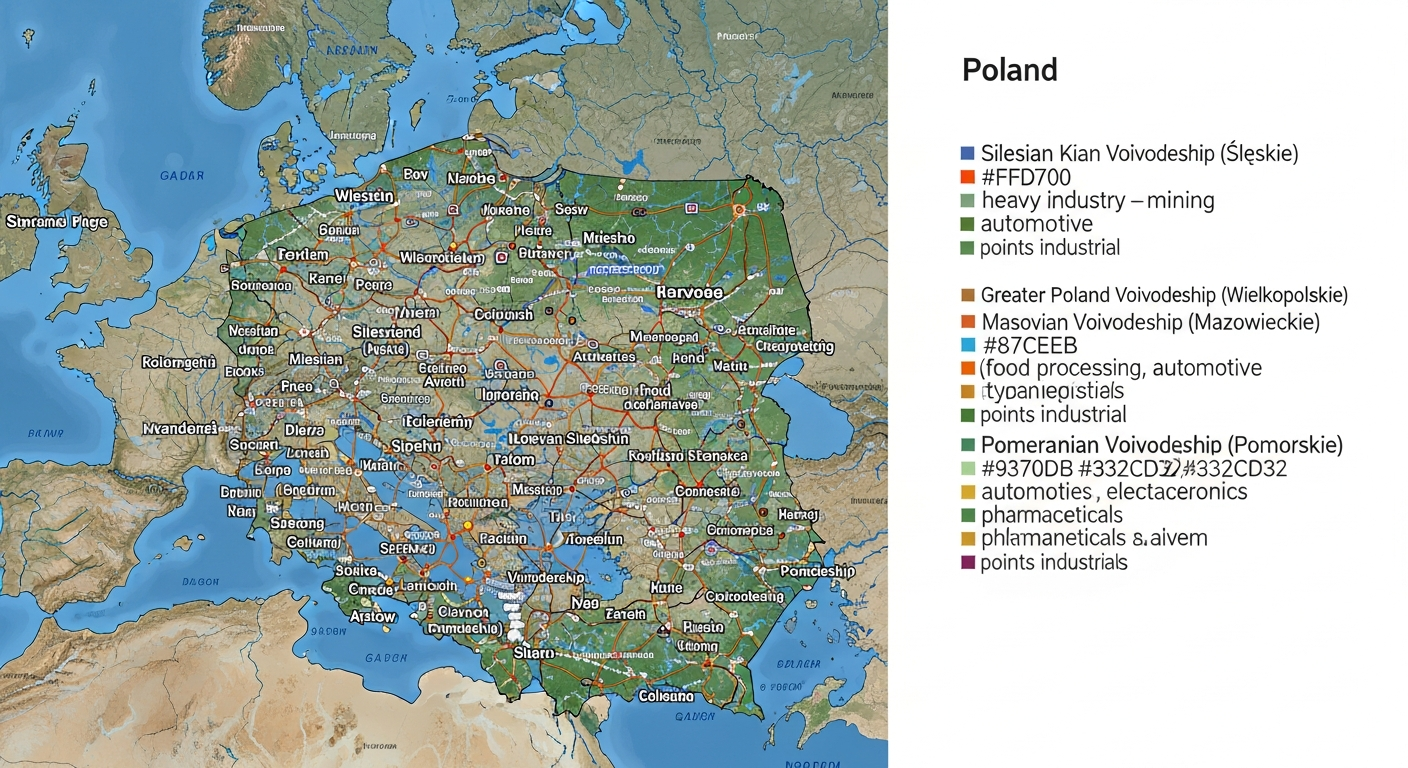
Poland's economic prowess is not uniformly distributed but concentrated in distinct regional clusters, each with its own B2B specialization and unique market characteristics. Understanding these regional dynamics is crucial for businesses aiming to penetrate specific niches or optimize their logistics and sales strategies. The three most prominent regions – Silesia, Warsaw, and Gdansk – exemplify the diverse economic engines driving Poland's B2B growth, each offering unique opportunities and challenges for market participants.
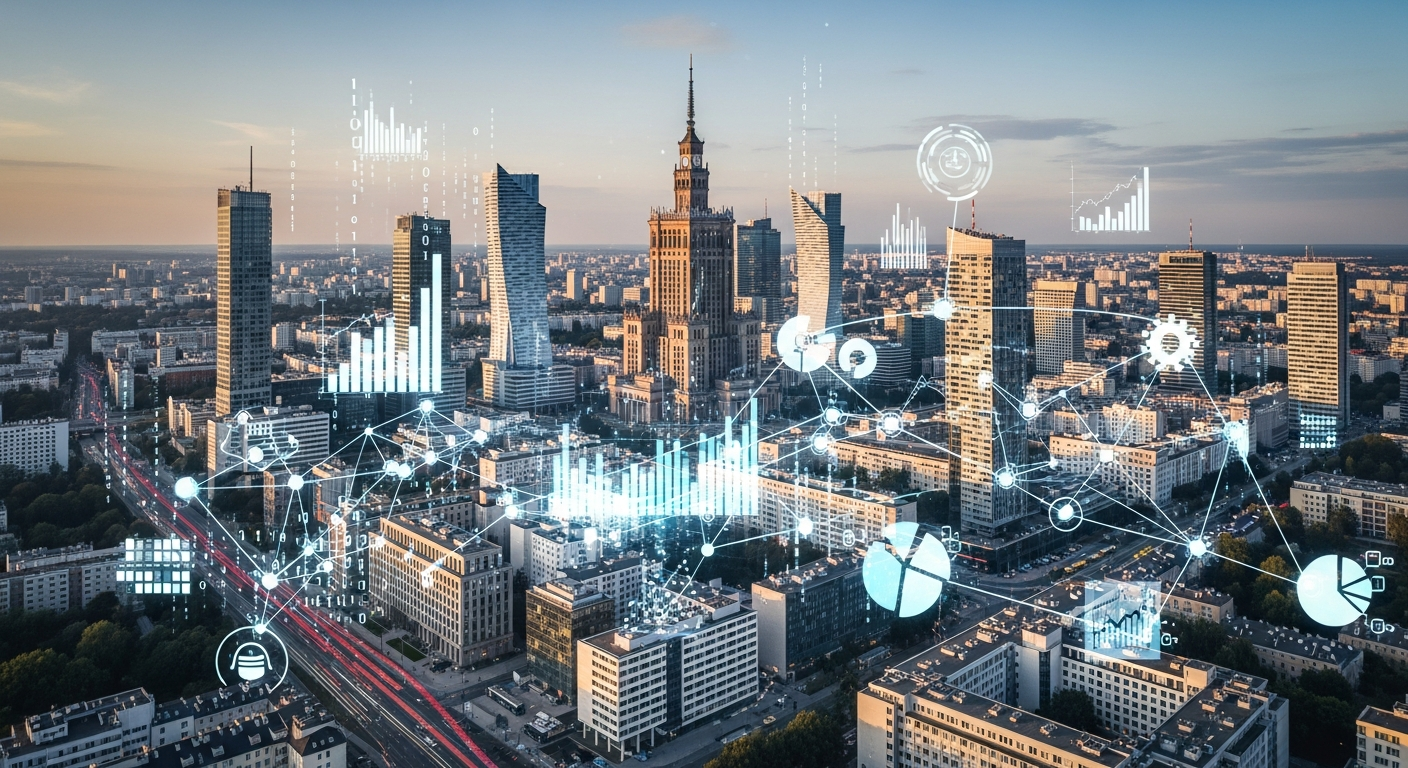
Silesia, located in the south, stands as Poland's industrial heartland. Historically renowned for coal mining, it has successfully transitioned into a diversified manufacturing and heavy industry hub. This region is a powerhouse for B2B transactions in sectors such as automotive components, machinery, metallurgy, chemicals, and energy. Companies operating here typically engage in large-volume, complex supply chain transactions, requiring robust logistics and specialized technical services. The B2B market in Silesia is characterized by strong regional networks, a skilled workforce, and a high demand for industrial automation, maintenance, and specialized engineering solutions. Investment in this region often targets production capabilities, R&D in materials science, and advanced manufacturing technologies.
In stark contrast, Warsaw, the nation's capital, serves as Poland's undisputed services cluster and financial center. This metropolitan area is home to the headquarters of numerous international corporations, financial institutions, and a burgeoning tech startup ecosystem. The B2B market in Warsaw is dominated by professional services (consulting, legal, accounting), IT and software development, marketing and advertising, and financial technologies. Transactions here are often characterized by high-value intellectual services, digital solutions, and strategic partnerships. The demand for sophisticated enterprise software, cloud services, cybersecurity, and AI-driven business intelligence platforms is particularly strong, reflecting the city's role as a nexus for innovation and corporate decision-making.
Gdansk, situated on the Baltic coast, forms the core of Poland's logistics, maritime, and trade sector. Its strategically important port facilitates significant international trade, making it a critical gateway for goods entering and leaving Central Europe. The B2B market in Gdansk thrives on logistics and supply chain services, warehousing, shipping, port operations, and related administrative and customs services. Furthermore, the region is experiencing growth in shipbuilding, offshore energy, and an emerging IT sector focused on maritime technologies and logistics optimization. Companies in Gdansk seek B2B solutions that enhance operational efficiency, streamline international trade processes, and provide advanced tracking and inventory management capabilities. The interplay between these distinct regional economies creates a complex yet interconnected national B2B market, where understanding local nuances is key to broader success.
The AI Revolution in B2B Lead Generation: Beyond Traditional CRMs
The landscape of B2B lead generation is undergoing a monumental shift, moving beyond the static limitations of traditional CRM databases towards the dynamic, proactive capabilities of AI agents. For decades, CRMs have served as essential repositories for customer data, enabling sales teams to track interactions, manage pipelines, and forecast sales. However, their reliance on manually updated information and reactive engagement models often falls short in today's fast-paced, data-rich environment. The advent of AI agents represents a paradigm shift, transforming lead generation from a labor-intensive, often hit-or-miss activity into a precise, predictive, and highly personalized process.
Traditional CRM databases, while foundational, present inherent challenges in the context of modern B2B outreach. Data decay is a constant issue, with company details, contact information, and decision-maker roles changing frequently. This necessitates continuous, often manual, data cleansing and enrichment, consuming valuable resources. Furthermore, traditional CRMs primarily function as systems of record, offering limited capabilities for proactive engagement or real-time market intelligence. Sales teams often spend disproportionate amounts of time on data entry and lead qualification, rather than on high-value activities like relationship building and closing deals. This inefficiency creates a bottleneck in the sales funnel, hindering scalability and growth.

Enter AI agents, such as Scopio's AI Lead Generation & Outbound Calling agent, which fundamentally redefine the lead generation process. These intelligent systems leverage machine learning, natural language processing, and vast datasets to identify, qualify, and engage potential leads with unprecedented accuracy and efficiency. Unlike static CRM entries, AI agents are dynamic; they continuously monitor market trends, analyze public and private data sources, and predict which businesses are most likely to convert. They can autonomously initiate outbound communications, conduct preliminary qualification calls, and even personalize messaging based on real-time insights into a prospect's needs and pain points. This proactive approach ensures that sales teams receive a pipeline of highly qualified, engaged leads, significantly reducing the time and effort traditionally spent on prospecting.
The core advantage of AI agents lies in their ability to process and synthesize information on a scale impossible for human teams. Scopio's AI agents, for instance, can analyze millions of data points – from company financial statements and news articles to social media activity and industry reports – to build comprehensive profiles of potential clients. They don't just store data; they understand it. With capabilities like vector memory, these agents learn from every interaction, building a deep, persistent understanding of each customer's unique context, preferences, and journey. This enables hyper-personalized communication, whether through an iframe AI Voice Agent embedded on a website for instant customer interaction or through targeted outbound campaigns. The result is a shift from generic outreach to highly relevant, timely engagements that make any business "AI-purchasable," streamlining the entire B2B sales cycle and fostering stronger, more intelligent customer relationships.
The Bedrock of Trust: Quality and Validation of Polish Business Data
In the Polish B2B market, the integrity and reliability of business data are not just a matter of convenience; they are fundamental to legal compliance, financial security, and efficient commerce. Navigating this landscape requires an understanding of the official data sources and validation mechanisms that underpin every legitimate business transaction. Unlike markets with less centralized data, Poland offers robust public registries and APIs that, when leveraged correctly, provide a high degree of confidence in business identity and status. This structured approach to data management is a significant asset for any enterprise operating or expanding within the country.
At the heart of Polish business data validation are two primary identifiers: NIP (Numer Identyfikacji Podatkowej – Tax Identification Number) and REGON (Rejestr Gospodarki Narodowej – National Economy Register Number). The NIP is a unique 10-digit tax identification number assigned to all legal entities and individuals conducting business activities, essential for all tax-related operations. REGON, a 9-digit (for individuals) or 14-digit (for legal entities) statistical number, identifies economic entities for statistical purposes. Both numbers are publicly accessible and serve as crucial verification points, ensuring that businesses are registered and recognized by Polish authorities. Any legitimate B2B transaction in Poland will invariably reference these identifiers, making their validation a non-negotiable step in due diligence.
Beyond these identifiers, Poland provides comprehensive public registries. For sole proprietorships and civil partnerships, the Centralna Ewidencja i Informacja o Działalności Gospodarczej (CEIDG – Central Register and Information on Economic Activity) offers an API that allows real-time access to key business information, including registration status, address, NIP, REGON, and business scope. This API is invaluable for verifying the operational status and basic details of the vast number of small businesses that form a significant part of the Polish B2B ecosystem. For larger corporations, limited liability companies (sp. z o.o.), and joint-stock companies (S.A.), the Krajowy Rejestr Sądowy (KRS – National Court Register) provides more extensive data. The KRS contains detailed information on company structure, management boards, share capital, statutory changes, and financial filings, offering a transparent view into corporate governance and financial health.
The upcoming mandatory implementation of KSeF E-Invoice Automation by February 2026 will further enhance the quality and accessibility of Polish business data. KSeF will standardize electronic invoicing, requiring all B2B invoices to be issued and received through a central government system. This will not only ensure the authenticity and integrity of transactional data but also provide a real-time, verifiable record of B2B exchanges. For platforms like Scopio, this regulatory framework provides a rich, verified data stream that can be integrated with our AI-powered commerce solutions. Our ability to map and leverage this validated data, from NIP/REGON to CEIDG and KRS, is central to making any business AI-purchasable and enabling seamless, compliant B2B transactions. Learn more about our comprehensive solutions for B2B commerce.
Scopio's Strategic Advantage: Mapping Data to AI-Powered Commerce
In the evolving landscape of global commerce, the ability to seamlessly integrate diverse data sources with intelligent automation is no longer a luxury but a necessity. Scopio, as Europe's first MCP+UCP AI commerce platform, stands at the forefront of this transformation, offering a strategic advantage by meticulously mapping validated Polish business data to AI-accessible product catalogs. This sophisticated integration is the cornerstone of making any business "AI-purchasable," enabling unprecedented levels of efficiency, personalization, and scalability in B2B transactions.
The core of Scopio's strategic advantage lies in its unique MCP+UCP (Machine Consumable Product + Universal Commerce Protocol) Commerce Layer. This layer is designed to ingest, process, and standardize product and service information from any business, making it universally understandable and actionable by AI systems. When applied to the rich, verified Polish business data – including NIP/REGON numbers, detailed CEIDG records for sole proprietorships, and comprehensive KRS data for corporations – Scopio transforms raw legal and operational information into intelligent, structured product catalogs. This process involves not just data aggregation but also semantic enrichment, ensuring that AI agents can accurately interpret and utilize the information for various commerce functions, from lead generation to automated dispute resolution.
Consider the practical implications: a manufacturing company in Silesia, registered with a specific NIP and detailed KRS entries, offers a range of industrial components. Scopio's platform ingests this public data, cross-references it with product information (potentially from existing ERPs or even unstructured sources), and converts it into MCP-accessible product catalogs. This means that an AI agent, whether Scopio's own AI Lead Generation & Outbound Calling agent or a third-party AI system, can instantly understand the manufacturer's offerings, pricing, specifications, and availability. This foundational data mapping then powers a suite of Scopio products, from the Shopify B2B Connector, enabling seamless integration with existing e-commerce infrastructures, to the TikTok Shop Integration, opening new avenues for B2B discovery and sales through social commerce.
Furthermore, Scopio's AI Social Content Studio leverages these structured catalogs to generate highly personalized and targeted marketing content, automatically adapting to the specific needs and preferences of identified B2B prospects. The AI Video Dubbing & Translation tool ensures that product information and marketing messages can transcend linguistic barriers, reaching a broader international audience. Within our Automated Marketplace, this data mapping facilitates AI dispute resolution, where intelligent agents can analyze transaction histories, product descriptions, and communication logs to mediate disagreements fairly and efficiently. This holistic approach, from initial data ingestion and validation to advanced AI-driven commerce functionalities, positions Scopio as an indispensable partner for businesses seeking to thrive in the AI-powered B2B economy, particularly within the robust and data-rich Polish market.
Poland in Context: A Comparative Look at Central European B2B Markets
To fully appreciate the dynamics of the Polish B2B market, it is essential to view it within the broader Central European context, comparing its patterns against key regional players like Germany, the Czech Republic, and Ukraine. While each nation presents unique characteristics shaped by historical, economic, and political factors, common threads of digitalization and AI adoption are weaving new tapestries of commerce across the region. This comparative analysis highlights Poland's distinct strengths, challenges, and its pivotal role in the evolving Central European B2B landscape.
Germany, as Europe's largest economy, sets a high benchmark for B2B maturity, characterized by highly sophisticated supply chains, a strong emphasis on precision engineering and high-tech manufacturing, and deeply entrenched business relationships. German B2B transactions often involve complex contracts, rigorous quality standards, and a strong preference for established suppliers. Digitalization is widespread, but often follows a more structured, enterprise-level adoption path, with a focus on ERP integration and Industry 4.0 initiatives. Data quality is exceptionally high, supported by robust legal frameworks and well-maintained public registries, making due diligence straightforward. However, market entry can be challenging due to high competition and established networks.
The Czech Republic, a smaller but highly developed economy, mirrors some of Germany's industrial strength, particularly in automotive and machinery. Its B2B market is characterized by a strong export orientation, high levels of innovation, and a pragmatic approach to technology adoption. Digitalization is advanced, with a significant number of SMEs actively using e-commerce platforms and cloud services. Data quality is good, with accessible business registries and a transparent regulatory environment. The Czech B2B market is agile and receptive to new technologies, making it an attractive testing ground for AI-powered solutions, though its smaller market size means lower overall transaction volumes compared to Poland or Germany.
"Poland's B2B market, while exhibiting the robust industrial backbone seen in Germany and the agility of the Czech Republic, differentiates itself through its aggressive embrace of digital transformation and its strategic geographic position, making it a critical bridge for AI-powered commerce across Central and Eastern Europe."
Ukraine, despite ongoing geopolitical challenges, possesses immense long-term potential, driven by a highly skilled IT workforce, a large domestic market, and a strong agricultural and industrial base. Its B2B market is rapidly digitalizing, often leapfrogging older technologies due to a necessity for resilience and efficiency. While data infrastructure and regulatory frameworks are still evolving, there is a strong demand for innovative solutions, particularly in logistics, fintech, and cybersecurity. AI adoption is growing, especially within its vibrant tech sector. However, businesses entering Ukraine's B2B market must navigate higher risks and complexities related to data verification and regulatory compliance, making robust, AI-driven verification platforms like Scopio even more critical.
Poland distinguishes itself by combining a large, rapidly growing domestic market with significant export capabilities, particularly within the EU. Its B2B sectors are robust and diverse, from heavy industry to advanced services. Crucially, Poland is demonstrating an accelerated pace of digital transformation, fueled by both government initiatives (like KSeF) and a proactive business community. The quality of Polish business data, backed by NIP/REGON, CEIDG, and KRS, provides a solid foundation for AI-powered commerce, offering a balance of transparency and growth potential that positions it as a highly attractive and increasingly sophisticated B2B market in Central Europe. This unique blend makes Poland a prime environment for the deployment and scaling of advanced AI commerce platforms.
| Market Metric | Poland (Projected 2026) | Germany | Czech Republic | Ukraine |
|---|---|---|---|---|
| Total B2B Market Value (Illustrative) | ~€400 Billion (PLN 1.8T) | ~€2.5 Trillion | ~€150 Billion | ~€80 Billion (Pre-conflict) |
| SME Contribution to GDP | ~70% | ~55% | ~60% | ~50% |
| Digital B2B Transaction Adoption | High (Rapidly Accelerating) | Very High (Mature) | High (Progressive) | Medium (Fast Growth) |
| AI Adoption in B2B (Current) | Medium-High (Early Adopters) | Medium (Industrial AI Focus) | Medium (Tech & Services) | Medium (IT Sector Led) |
| Data Quality & Accessibility | High (Improving with KSeF) | Very High | High | Medium (Improving) |
| Regulatory Environment for Digital Commerce | Progressive (KSeF Mandate) | Mature & Comprehensive | Stable & EU Aligned | Evolving (EU Harmonization) |
The AI Adoption Curve: Which Industries Lead the B2B Transformation?
The integration of AI into B2B transactions is not a uniform phenomenon across all industries; rather, it follows a distinct adoption curve, with certain sectors demonstrating a faster embrace of AI-powered solutions. This early adoption is typically driven by a confluence of factors: the availability of structured data, the potential for significant efficiency gains, the pressure to innovate, and the inherent complexity of their B2B operations. Understanding these leading sectors provides valuable insights into the broader trajectory of AI in Polish B2B commerce and highlights areas where platforms like Scopio are already delivering transformative impact.
Unsurprisingly, the technology and e-commerce sectors are at the vanguard of AI-powered B2B transaction adoption. Companies in these domains are inherently digital-first, possess extensive data sets, and are accustomed to rapid technological cycles. They are quickly integrating AI for automated customer support, personalized product recommendations, dynamic pricing, and sophisticated lead qualification. Logistics and supply chain management companies are also fast adopters, leveraging AI for route optimization, inventory forecasting, warehouse automation, and predictive maintenance. The sheer volume and complexity of data generated in logistics make it an ideal candidate for AI-driven efficiency improvements, from automated marketplace dispute resolution to optimized shipping labels for partners like InPost, DHL, and DPD.
Beyond these immediate frontrunners, several other industries are demonstrating a significant acceleration in AI adoption. The financial services sector, particularly in areas like credit assessment, fraud detection, and personalized financial product offerings for businesses, is rapidly deploying AI. Professional services, including legal and consulting firms, are utilizing AI for document analysis, contract review, and knowledge management, enhancing their B2B client offerings. Manufacturing, especially in advanced sectors like automotive and electronics, is increasingly integrating AI for quality control, predictive maintenance of machinery, and optimizing production schedules, moving towards fully AI-powered procurement and supply chain interactions. The upcoming KSeF mandate is expected to further catalyze AI adoption across all sectors by standardizing transactional data, making it more amenable to AI analysis.
Analysis of projected Google Trends data for 2025-2026 in Poland strongly indicates a sharp increase in B2B search terms related to AI. Keywords such as "AI B2B Poland," "automated sales Poland," "KSeF solutions," "AI lead generation," and "AI commerce platform" are expected to show compound annual growth rates exceeding 25%. This surge in search interest reflects a growing awareness and demand among Polish businesses for intelligent solutions that can streamline operations, reduce costs, and unlock new revenue streams. Companies are actively seeking platforms that can provide an MCP+UCP AI Commerce Layer, enabling their products to be "AI-purchasable" and their B2B processes to be automated end-to-end. This trend underscores the critical timing for businesses to invest in AI-driven commerce capabilities to remain competitive and future-proof their operations. To explore how Scopio can empower your business with these advanced capabilities, visit our contact page.
FAQ: 5 Questions About Accessing and Validating Polish Business Data
-
How can I verify a Polish company's legal status and operational legitimacy?
Verifying a Polish company's legal status involves checking official public registries. For sole proprietorships and civil partnerships, the Centralna Ewidencja i Informacja o Działalności Gospodarczej (CEIDG) provides real-time data through its API and public search portal. For limited liability companies (sp. z o.o.) and joint-stock companies (S.A.), the Krajowy Rejestr Sądowy (KRS) is the authoritative source, accessible via its online search engine or dedicated APIs. Both registries provide crucial information such as registration status, legal form, address, NIP, REGON, and details about the company's management and capital. Cross-referencing information from these sources is key to ensuring legitimacy.
-
What is the significance of NIP and REGON numbers in Polish B2B transactions?
NIP (Numer Identyfikacji Podatkowej – Tax Identification Number) and REGON (Rejestr Gospodarki Narodowej – National Economy Register Number) are fundamental identifiers for any business operating in Poland. NIP is a unique 10-digit tax identification number mandatory for all tax-related activities, including invoicing and financial reporting. REGON is a statistical identification number used by public administration bodies. Both numbers are essential for legal and financial compliance, serving as primary verification points in any B2B transaction. They confirm that a business is officially registered and recognized by Polish authorities, providing a layer of trust and transparency.
-
Is real-time Polish business data available via API, and how reliable is it?
Yes, real-time Polish business data is available via APIs from official sources. The CEIDG offers a public API for sole proprietorship data, which is highly reliable and updated frequently. While the KRS does not offer a direct public API for bulk data, commercial providers and specialized platforms often offer API access to KRS data, typically aggregated and kept up-to-date. The reliability of this data is generally very high because it originates from official government registries. Platforms like Scopio integrate directly with these sources, ensuring that the business data mapped to MCP-accessible product catalogs is current and verified, facilitating seamless AI-powered commerce.
-
How does KSeF (Krajowy System e-Faktur) impact B2B transactions and data quality in Poland?
KSeF (National e-Invoicing System), mandatory by February 2026, will profoundly impact B2B transactions and data quality. It mandates that all B2B invoices in Poland be issued and received through a central government platform, standardizing the format and ensuring real-time validation. This will significantly enhance the integrity and authenticity of transactional data, as all invoices will be verified against official business registries. For businesses, KSeF means increased transparency, reduced administrative burden, and faster tax processes. For data quality, it creates an unprecedented, vast, and reliable stream of structured transactional data, which is invaluable for AI-driven analytics, compliance, and automated commerce solutions.
-
What are the main challenges when accessing and utilizing Polish B2B data, and how can they be overcome?
While Polish B2B data is generally robust, challenges can include navigating multiple registry sources (CEIDG vs. KRS), understanding the Polish language requirements, and ensuring continuous data accuracy due to business changes. For international businesses, integrating disparate data sources into existing systems can also be complex. These challenges can be overcome by leveraging specialized platforms like Scopio. Our MCP+UCP Commerce Layer is designed to ingest, validate, and standardize data from all official Polish sources, automatically translating and mapping it to AI-accessible formats. This eliminates manual data handling, ensures real-time accuracy, and provides a unified data foundation for all AI-powered B2B commerce activities, from lead generation to automated marketplace operations.
Unlock Poland's B2B Potential with Scopio
The Polish B2B market in 2026 represents a landscape of immense opportunity, characterized by robust growth, diverse sectoral strengths, and a rapidly accelerating embrace of digital transformation and AI. From the industrial heartland of Silesia to the service-driven dynamism of Warsaw and the logistical prowess of Gdansk, businesses are increasingly seeking intelligent solutions to navigate complexity, enhance efficiency, and drive growth. The bedrock of verified Polish business data, underpinned by NIP, REGON, CEIDG, and KRS, combined with the transformative impact of KSeF, creates an unparalleled environment for AI-powered commerce.
Scopio stands ready to empower your enterprise to fully capitalize on this potential. Our MCP+UCP AI commerce platform is engineered to transform raw business data into actionable intelligence, making any business AI-purchasable. By seamlessly integrating with official Polish data sources, providing advanced AI Lead Generation & Outbound Calling agents, and offering comprehensive solutions like our AI Social Content Studio and Automated Marketplace with AI dispute resolution, Scopio is your strategic partner in unlocking the next frontier of B2B transactions.
Don't let the complexities of data validation or the rapid pace of AI adoption hold your business back. Embrace the future of B2B commerce with Scopio and turn Poland's data-rich market into your competitive advantage. Discover how our innovative solutions can streamline your operations, drive targeted engagement, and accelerate your growth.
Ready to transform your B2B strategy in Poland?
Explore Scopio's AI Commerce Solutions and Pricing Today.